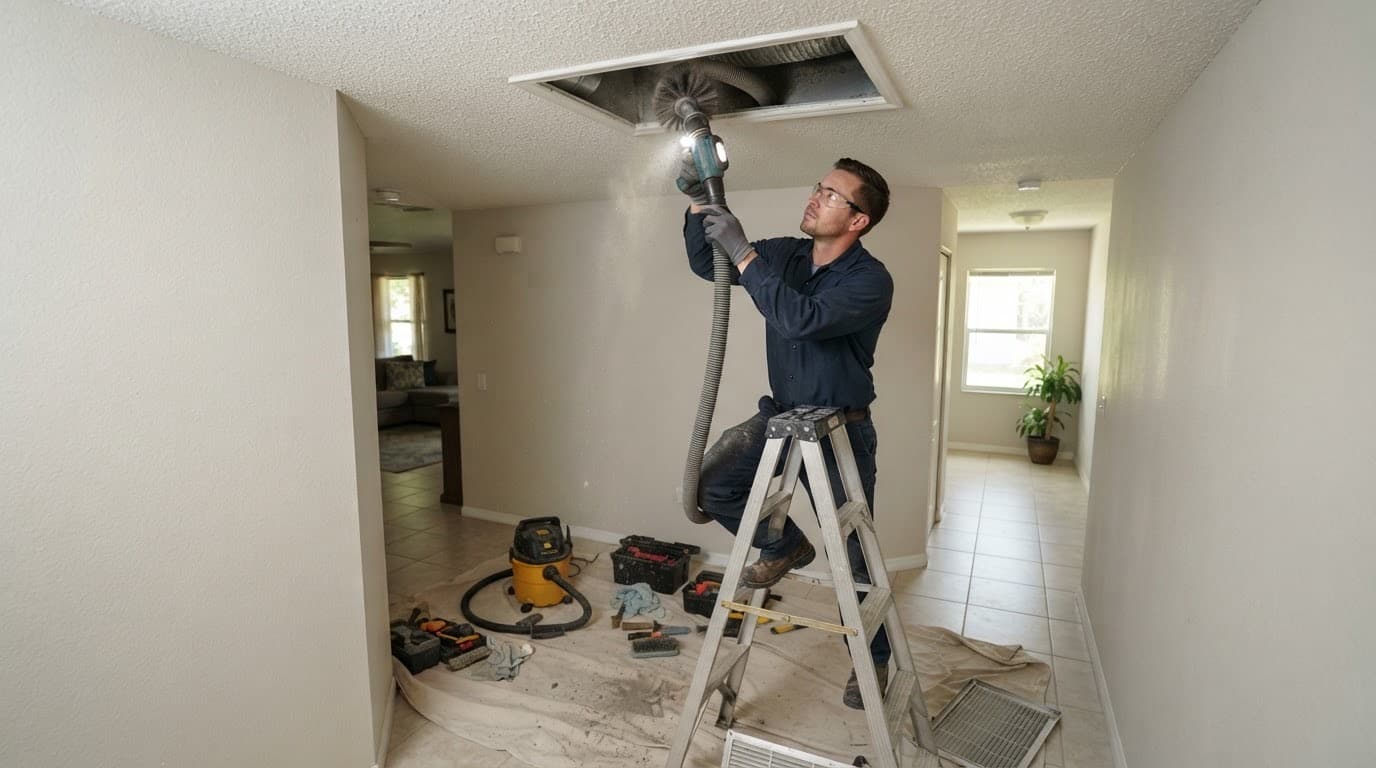
FL HVAC Team ·
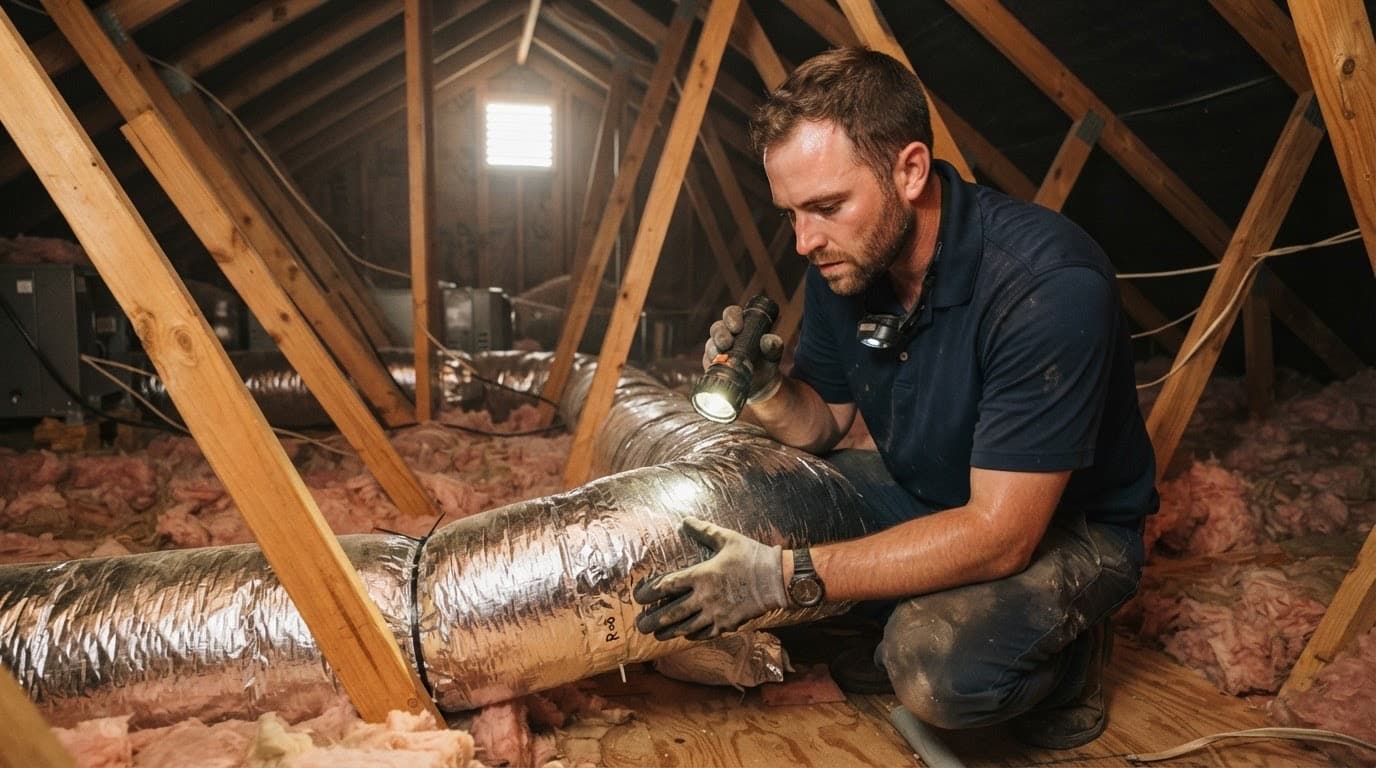
A technician crawls into your attic to fix what seemed like a simple airflow problem, and comes back down with news you were not expecting. The ductwork itself is the issue, not just one bad connection or a torn section that needs patching. Now you are staring down a decision that feels a lot bigger than a routine repair call.
This is one of the more confusing calls Tampa homeowners make, mostly because duct problems do not announce themselves clearly the way a dead compressor does. Sometimes a single crushed section really is an isolated fix. Sometimes what looks like one bad spot is actually the whole system reaching the end of its useful life at once, especially after years in a hot Tampa attic.
FL HVAC Team walks homeowners through this decision constantly, and the answer almost always comes down to a handful of concrete factors rather than a gut feeling. Knowing what those factors are before a technician even shows up puts you in a much better position to make the right call.
In this article, you will learn about:
- Why ductwork fails differently than other parts of an HVAC system
- The signs that point toward a simple repair
- The signs that point toward full replacement
- What financing and long-term costs look like for each path
Keep reading to find out which side of that decision your ductwork is actually on, and what it means for your home's comfort and your energy bills going forward.
Why ductwork problems are not always obvious
Unlike a compressor that either runs or does not, ductwork tends to fail slowly and unevenly. One section can be in decent shape while another, ten feet away in the same attic run, has already separated at a joint or lost most of its insulation. That unevenness is exactly why a single service call can turn into a bigger conversation than the homeowner expected.
Ductwork fails unevenly, not all at once
A technician called out for one weak room might find that the specific complaint traces back to a single disconnected joint, an easy fix. Or they might find that the joint failure is one symptom of insulation and duct material that has broken down across the whole system.
That unevenness is also why the same symptom, a room that will not cool properly, can mean two completely different things depending on the home. One case is a five-minute reconnection. The other is a system-wide problem that just happened to show up in one room first.
The only reliable way to tell the difference is a technician actually testing airflow and inspecting the full duct run rather than just the section closest to the complaint. Guessing based on one symptom in one room is how homeowners end up either overpaying for an unneeded replacement or underpaying for a repair that does not actually fix anything.
Tampa's climate accelerates duct wear
Attic temperatures here regularly climb well past 130 degrees on summer afternoons, and ductwork sitting in that heat day after day for over a decade takes a different kind of beating than duct systems in a cooler, drier climate. A few things make Tampa attics particularly hard on ductwork:
- Extreme heat cycling between scorching afternoons and cooler nights, which stresses seams and connections repeatedly over time
- High humidity, which speeds up insulation breakdown and can encourage moisture problems inside the duct system itself
- Long cooling seasons that keep the system running, and the ductwork working, for most of the year rather than a few concentrated months
None of that means every Tampa duct system is in crisis. It does mean that age and condition matter more here than they might in a milder climate, and that a system showing several small problems at once is more likely dealing with systemic wear than isolated bad luck.
Duct problems rarely stay contained to airflow
Leaks and gaps make the AC system work harder than it should, which shortens equipment life and raises bills even when nothing is technically wrong with the AC unit itself. That is one of the more frustrating parts of a duct problem for homeowners, since it can look and feel like an AC issue when the actual root cause sits entirely in the ductwork.
Duct problems also get mistaken for other issues more often than homeowners expect. A whistling sound from a vent usually points to a restriction or a gap in the duct run itself, not a problem with the AC unit. Restricted airflow from a struggling duct system is also a common, overlooked reason an AC freezes up in the middle of summer, since starved airflow across the coil lets ice build up even when the refrigerant charge and the equipment itself are perfectly fine.
Signs that point toward a repair
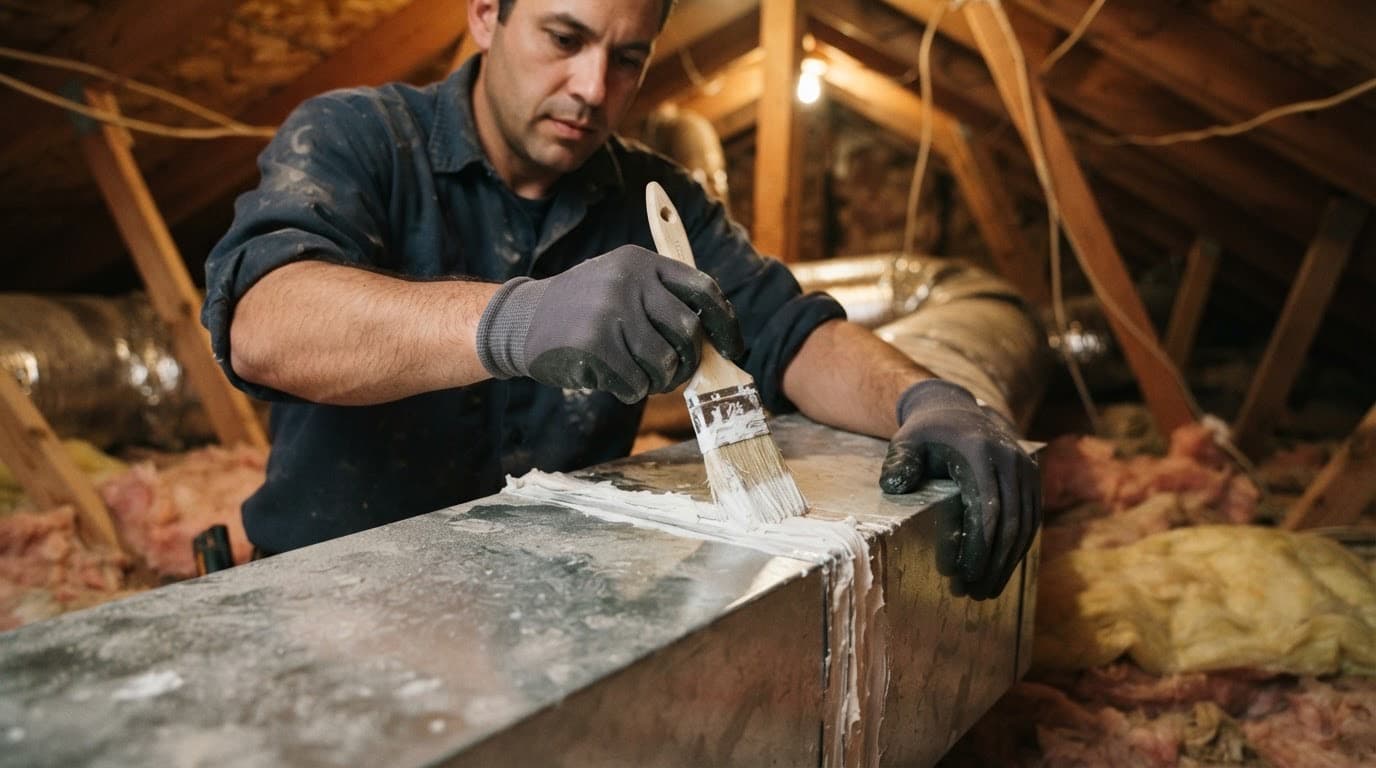
Not every duct issue means starting over. Plenty of problems are genuinely isolated, and fixing them properly restores the system to good working order without the cost or disruption of a full replacement.
What a genuinely repairable system looks like
A single disconnected joint or a small tear in an otherwise sound duct run is usually a straightforward repair. If the rest of the system tests well and shows no widespread insulation degradation, sealing or reconnecting that one section solves the problem without touching anything else.
A few situations tend to favor repair over replacement:
- The ductwork is relatively young, generally under ten years old, with no widespread signs of wear
- The problem is isolated to one or two accessible sections rather than spread across the whole run
- Airflow testing shows the system performing close to spec once the specific issue is addressed
- There is no visible mold, no pest damage, and no significant insulation breakdown elsewhere in the system
A system that checks most of those boxes is usually a good repair candidate, even if the specific fix involves more than one small patch. The distinguishing factor is whether the underlying material is still sound, not whether more than one thing happens to need attention.
Why duct sealing is often the right first move
Duct sealing itself deserves particular mention here, since it is one of the most cost-effective fixes available when leakage is the core problem rather than physical damage. According to the U.S. Department of Energy's ENERGY STAR program, typical homes lose about 20 to 30 percent of the air moving through the duct system to leaks, holes, and poorly connected sections, and sealing those leaks can meaningfully improve comfort and lower bills without any structural replacement involved.
If a technician's inspection turns up a handful of sealable leaks and otherwise sound ductwork, that is usually the more cost-effective and less disruptive path, and it is worth pursuing fully before jumping to replacement. Sealing does not fix physical damage or a sizing problem, but for a system whose only real issue is leakage, it can close most of that efficiency gap on its own.
When a repair genuinely resolves the complaint
The best indicator that a repair actually solved the problem is a return to normal performance across the whole home, not just the room that originally prompted the call. A technician who reconnects one joint and then retests airflow throughout the system, rather than just at the point of the original complaint, gives a much clearer picture of whether the fix actually held.
Homeowners should expect a straightforward explanation of what was found and why it was treated as a repair rather than a replacement candidate. If a technician cannot point to specific, isolated damage and instead describes widespread wear, that is usually a sign the conversation should shift toward replacement rather than another repair visit.
Signs that point toward replacement
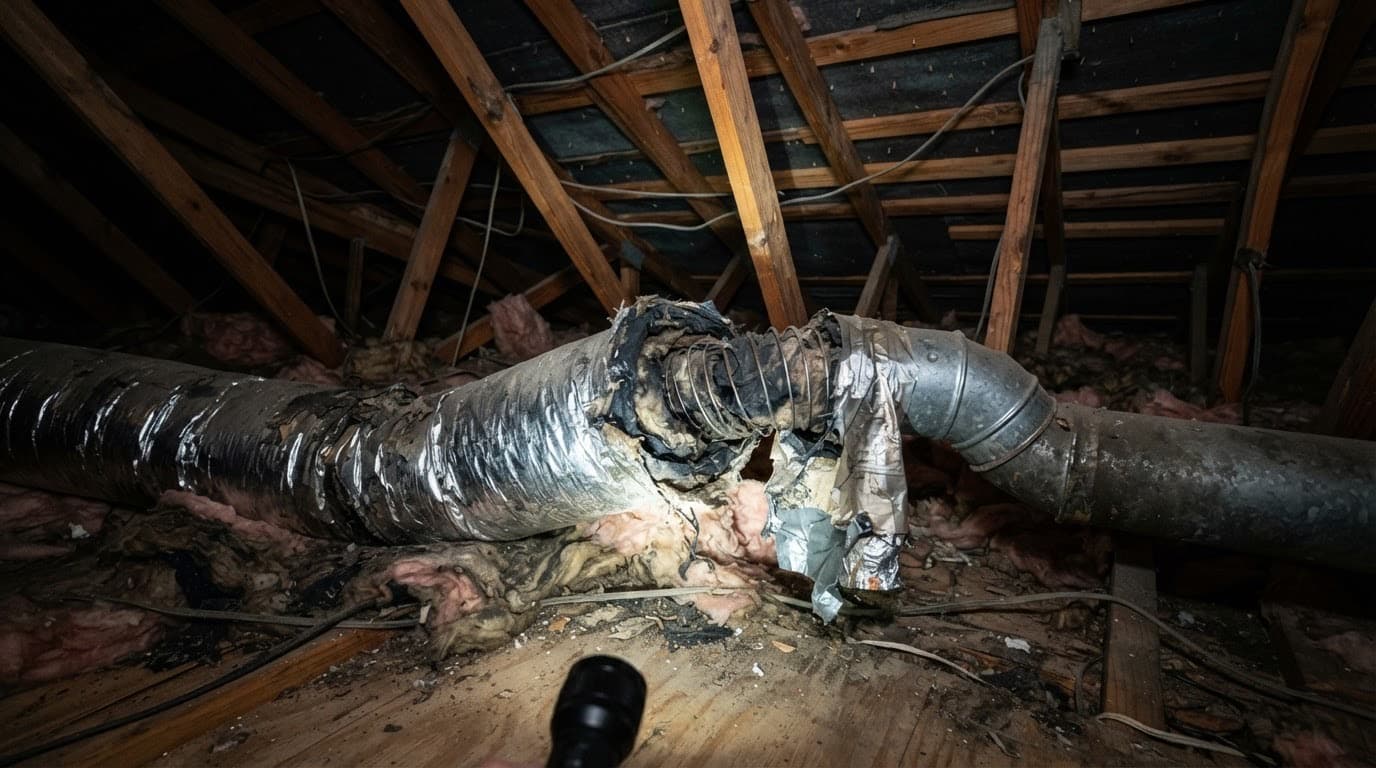
Some duct problems genuinely are not worth chasing with repair after repair. When the underlying material has broken down across most of the system, patching individual sections becomes a losing game where new problems keep surfacing faster than old ones get fixed.
Age and systemic wear as the deciding factor
Ductwork generally has a useful lifespan in the range of 15 to 25 years, and Tampa's heat and humidity tend to push systems toward the shorter end of that range rather than the longer one. A system already in its late teens or twenties, especially one that has never been resealed or inspected, is a strong candidate for replacement rather than another round of patchwork.
Age alone is not the only signal, but it changes how much benefit of the doubt an aging system deserves. A five-year-old system with one bad joint is almost certainly worth repairing. A twenty-year-old system with one bad joint that a technician finds during a closer look often turns out to have several more problems nearby, simply because the whole system has been exposed to the same years of heat and humidity.
The physical warning signs worth taking seriously
A few signals tend to point clearly toward full replacement:
- Multiple disconnected or crushed sections found throughout the attic run, not just one isolated spot
- Visible mold growth or a persistent musty smell that traces back to the ductwork itself
- Insulation that has degraded, compressed, or fallen away across large sections of the system
- A noticeable rise in household dust or pet dander circulating through the ducts, especially if allergy symptoms seem to get worse indoors
A persistent unusual odor coming from the vents, rather than a one-time smell, often means the duct material itself has started to break down. That kind of odor is usually a stronger signal than a single symptom in one room, since it points to something happening inside the ductwork system-wide rather than at one connection point.
When the real problem is design, not age
Rooms that stay uncomfortable no matter how the system is adjusted often point to something more fundamental than wear. Sometimes ductwork is not failing structurally at all, it was simply sized or routed incorrectly when it was installed, and no amount of sealing or patching fixes a design problem. In those cases, replacement is really an opportunity to correct something that was wrong from the start rather than just aging equipment catching up with the home.
Homeowners troubleshooting temperature zones that never seem to match the thermostat setting often assume the problem is the control system, when in a lot of cases the real culprit is a duct run that was never sized correctly to reach that part of the house in the first place. The U.S. Department of Energy's Building America program has specifically studied hot, humid climates like Orlando's alongside colder regions, and found that attic-installed ductwork in hot climates loses a substantial share of heating and cooling energy through the combination of air leakage and heat conduction through the duct walls themselves. That pattern lines up closely with what Tampa homeowners experience.
Weighing the cost and timing of each path
Cost is usually the first question homeowners ask, and it is a fair one, but the more useful comparison is total cost over time rather than the price of the immediate fix. A cheap repair that needs to be redone twice within a few years is not actually the cheaper option once that math is done.
Comparing the real cost of each option
Repairs are the lower upfront cost in almost every case, and for isolated problems in a system that is otherwise sound, that lower cost reflects a genuinely appropriate fix rather than a shortcut. Sealing leaks, reconnecting a joint, or patching a small tear are all relatively quick jobs that restore performance without a major disruption to the home.
Replacement carries a higher upfront cost, but it comes with real advantages that a series of repairs cannot match:
- A properly sized and routed system corrects any design flaws from the original installation
- New ductwork and insulation perform at their rated efficiency from day one, rather than degrading further while awaiting the next repair
- Energy savings compound over the life of the new system rather than being partially offset by ongoing leaks elsewhere
Financing is worth asking about directly if the cost of full replacement feels like a stretch. Many HVAC companies, FL HVAC Team included, offer financing options that spread the cost of a full duct replacement over time, which changes the calculation considerably compared to paying the full amount upfront.
Storm damage as an unplanned trigger
Storm damage is worth a specific mention for Tampa homeowners, since it can turn a healthy duct system into a compromised one overnight. Wind uplift and roof stress during a major storm can knock ductwork loose in the attic even when the roof itself holds up fine, so a post-storm HVAC inspection is a reasonable step even when nothing seems obviously wrong from inside the house.
A storm can also accelerate a decision that was already close. A duct system in decent but aging condition might have held on for another year or two under normal circumstances, but the same system after a major storm event may have crossed the line from repairable to a genuine replacement candidate.
Making the actual decision
The honest answer for most homeowners sits somewhere between "fix the one thing that's broken" and "replace everything." A thorough inspection that actually tests airflow and checks the condition of the whole system, not just the section causing the current complaint, is what turns that decision from a guess into an informed choice.
A good inspection ends with a clear explanation either way. If the answer is repair, the technician should be able to point to the specific issue and explain why the rest of the system tested sound. If the answer is replacement, the explanation should cover more than just age, pointing to the actual condition found throughout the attic run.
Conclusion
Ductwork rarely fails all at once, which is exactly what makes the repair-versus-replacement decision so confusing for most homeowners. A single bad joint and a system-wide breakdown can both show up as the same symptom, a room that will not cool properly, even though the right fix for each is completely different.
The good news is that this decision does not have to be a guess. An inspection that actually tests the whole system, not just the spot causing the immediate complaint, tells you clearly which side of the line your ductwork falls on. Tampa's climate makes that inspection more valuable than it might be elsewhere, since heat and humidity accelerate wear in ways that can hide a bigger problem behind what looks like a small one.
Whichever direction the inspection points, acting on real information beats guessing. A repair done on a system that actually needed replacement just delays the inevitable, and a full replacement on a system that only needed sealing wastes money that could have gone toward something else.
Not sure whether your ductwork needs a repair or a full replacement? FL HVAC Team can inspect your system, test it properly, and give you a straight answer about which path actually makes sense for your home.