FL HVAC Team ·
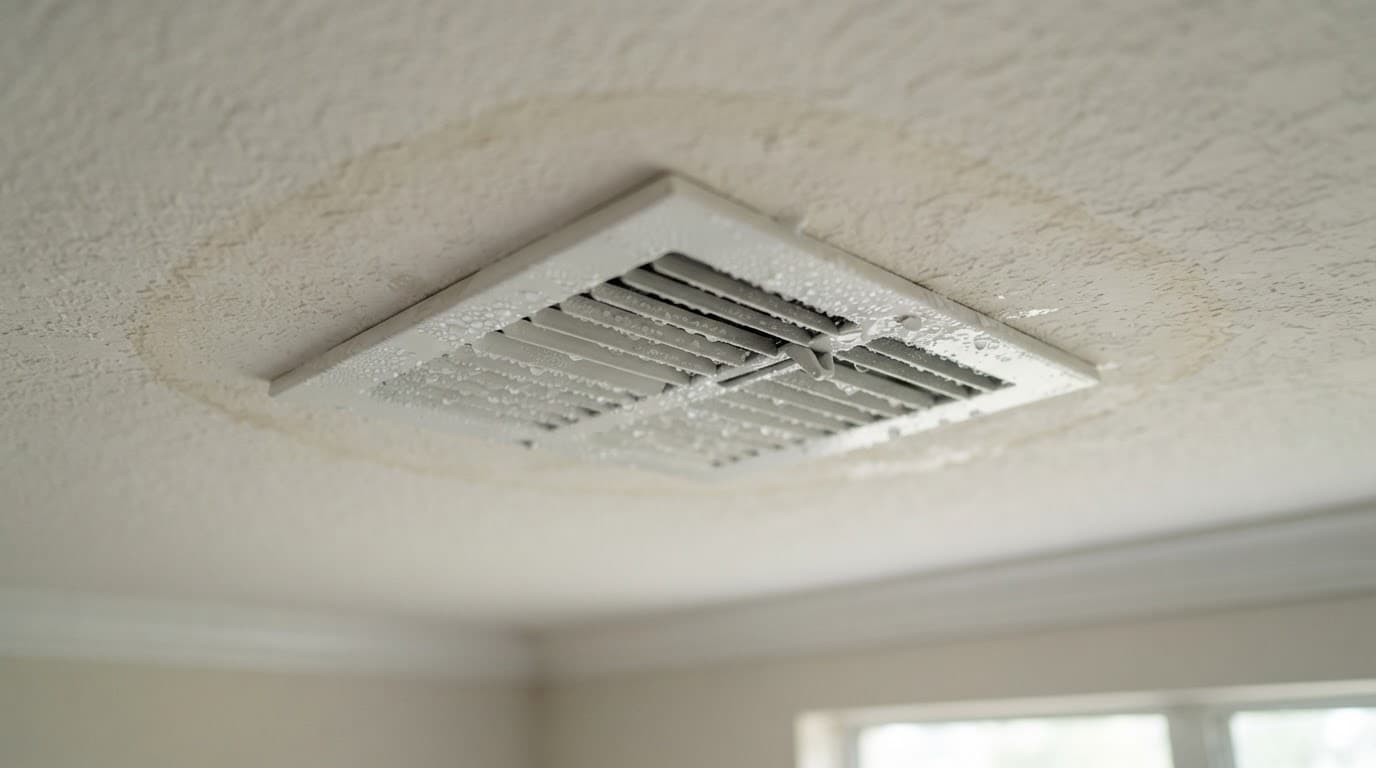
Somewhere between November and January, a lot of Tampa Bay homeowners notice something odd. Their AC vents are dripping. Their air handler closet has a damp spot on the floor. A supply register in the hallway has a ring of water stain around it that was not there in August.
It feels backwards. Winter is supposed to be the dry season. But that "sweating" is not a mystery or a malfunction most of the time, it is a predictable side effect of how AC systems and Florida humidity interact once the temperature drops enough to change how the house runs.
FL HVAC Team sees a real spike in these calls every winter, almost always from the same handful of causes. Understanding what is actually happening behind that dripping vent makes the difference between a five-minute fix and a call that gets put off until it causes real water damage.
In this article, you will learn about:
- Why condensation shows up more in winter than in the middle of summer
- What is really happening on a physical level when a vent or duct sweats
- The most common culprits behind winter AC sweating in Tampa Bay
- When sweating is a simple fix and when it signals a bigger problem
Keep reading to find out whether that damp spot on your ceiling or vent is a quick adjustment or something that needs a technician's attention sooner rather than later.
Why Tampa Bay winters create the perfect setup for condensation
Condensation has one cause, always: humid air meeting a surface that is colder than its dew point. That is true in July and it is true in January. What changes between seasons is how likely a home is to have both of those conditions at the same time, and winter in Tampa Bay sets that up more often than most people expect.
Tampa's mild winters set the stage
Tampa's average January high sits in the low 70s, cool enough that many homes run their AC far less than they do in summer, but rarely cold enough to shut it off entirely on a warm afternoon. That in-between weather is exactly the setup that creates sweating problems, since the AC still needs to run, just far less predictably than it does in peak summer.
A home that spends July running its AC almost continuously and January running it in short, scattered bursts is dealing with two very different operating patterns, even though the equipment itself has not changed at all.
Why short cycling matters more than most homeowners realize
Two things happen at once during a typical Tampa Bay winter stretch:
- Outdoor humidity stays high even as temperatures drop, since Gulf Coast air rarely gets genuinely dry the way inland winter air does
- The AC system runs in short, inconsistent bursts instead of the long, steady cycles it runs during peak summer heat
A system that runs in long, steady stretches pulls moisture out of the air efficiently and keeps ductwork and vents at a stable, controlled temperature. A system that clicks on and off in short bursts never quite reaches that steady state, and the surfaces closest to the cold air, like metal duct connections and supply registers, can end up colder relative to the surrounding humid air than they would during a normal summer cycle.
The mechanism behind the mismatch
That mismatch, cold surface plus persistently humid air, is the entire mechanism behind winter sweating. Nothing is broken in the moment it starts. It is physics doing exactly what physics does when those two conditions line up.
Once a homeowner understands that the cause is a temperature and humidity mismatch rather than a failure, the rest of the troubleshooting process becomes much easier to follow, since every fix described below is really just addressing one side or the other of that same equation. Short cycling does more than create sweating conditions too. Starting and stopping repeatedly puts more strain on the compressor than long, steady runtimes do, and a struggling compressor is one more downstream cost of the same winter pattern driving the condensation.
What is physically happening when a vent or duct sweats
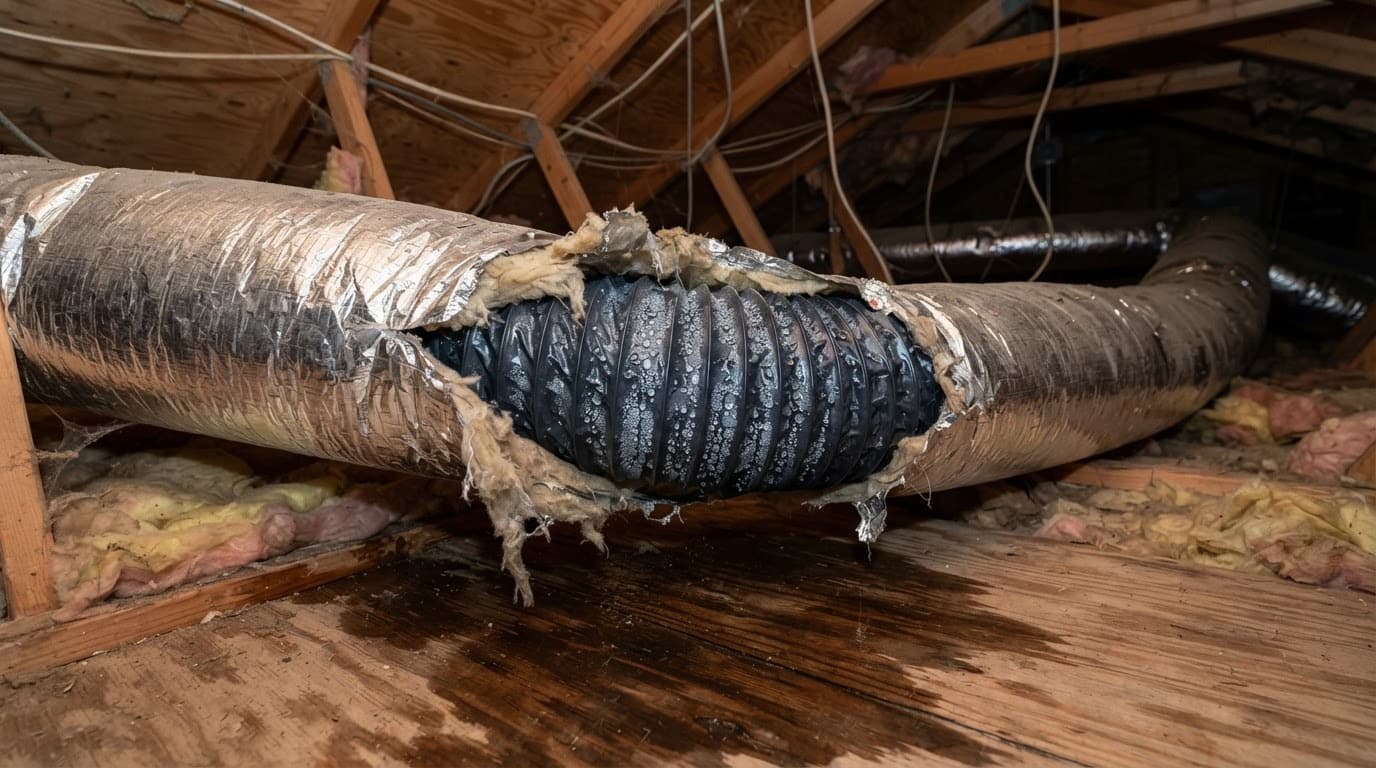
Every surface has a dew point relationship with the air around it. When air touches a surface colder than its dew point, the water vapor in that air has nowhere to go but back into liquid form. That is condensation, whether it happens on a cold glass of iced tea or a metal AC vent.
The spots in a home that take the brunt of it
A few specific spots in a typical home absorb most of the winter condensation:
- Supply registers and vent covers, especially metal ones in humid rooms like bathrooms or kitchens
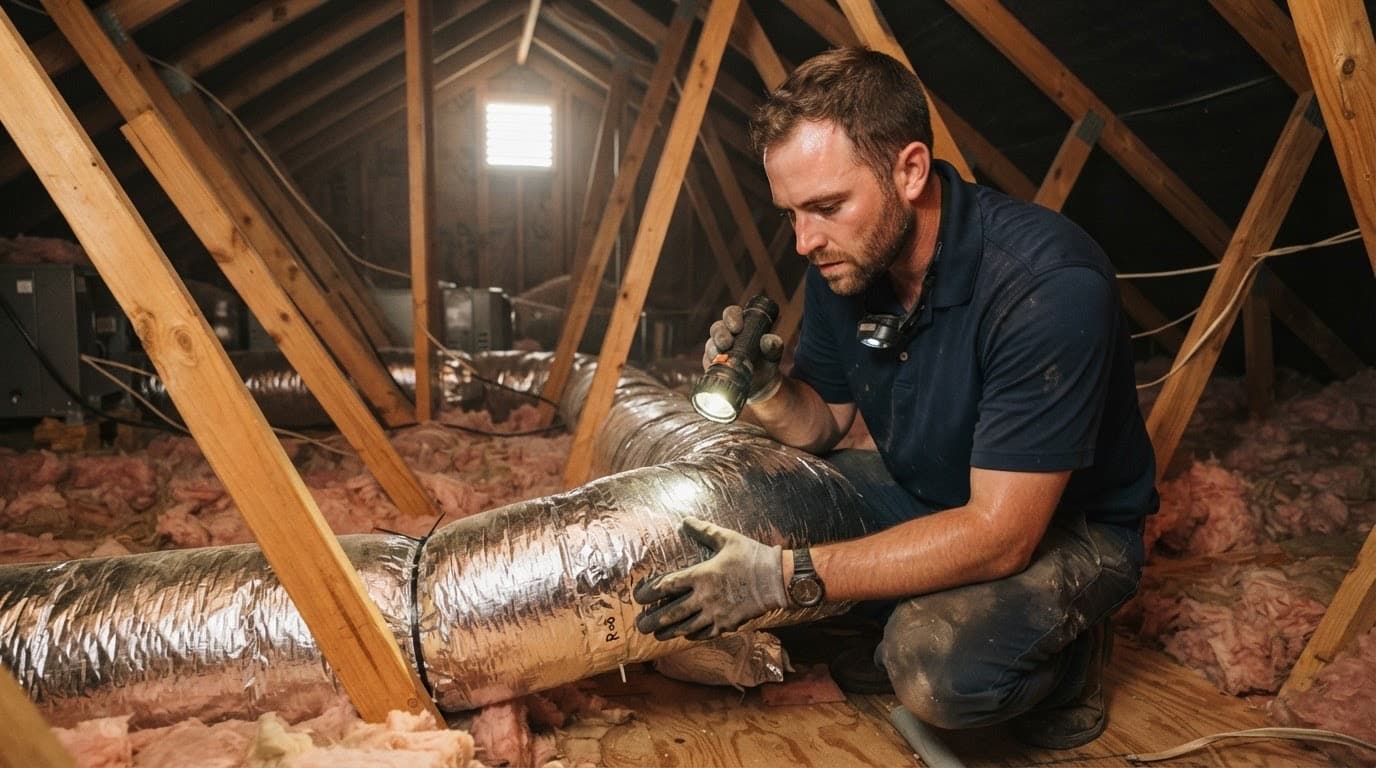
- Ductwork running through unconditioned spaces like attics or garages, where the temperature difference between the duct surface and surrounding air is largest
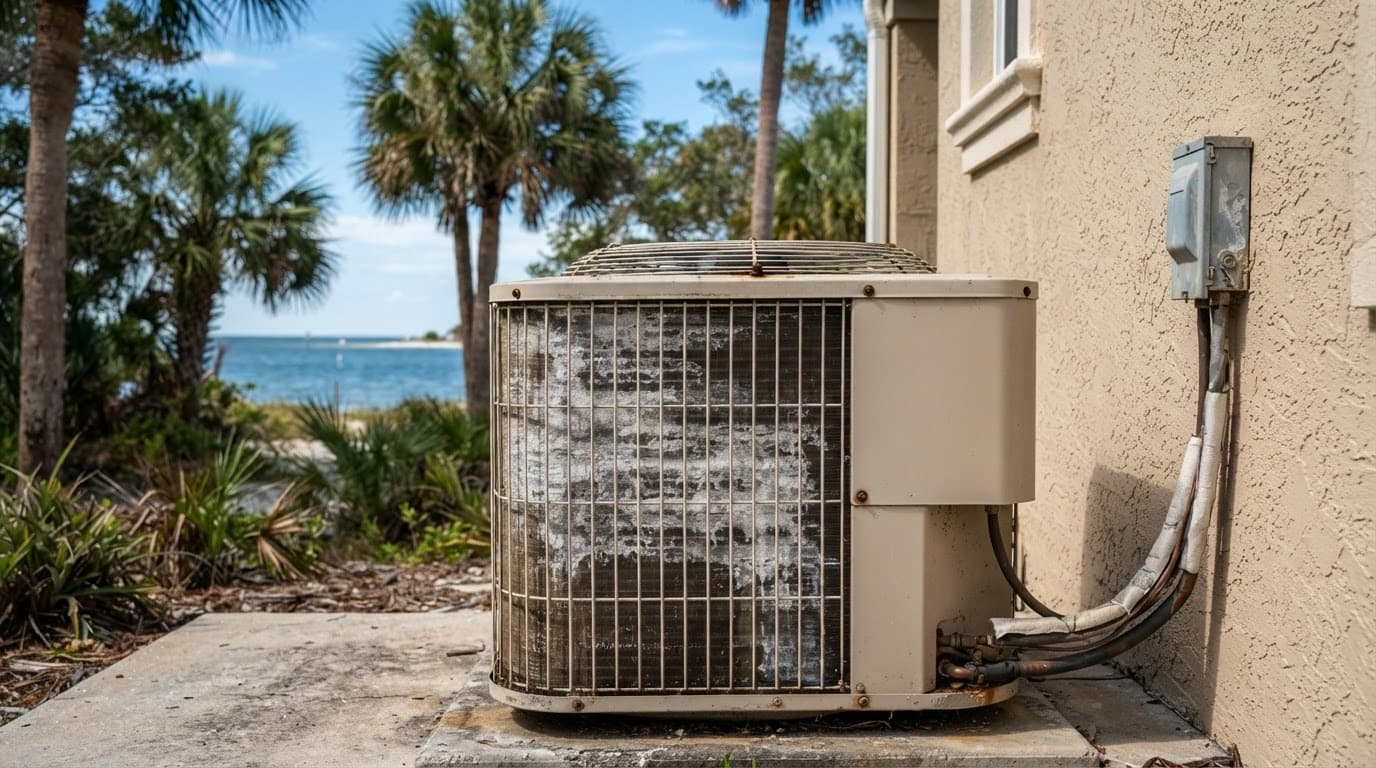
- The air handler cabinet itself, particularly in homes where the unit sits in a garage or other space that is not climate controlled
Each of these spots shares one thing in common: exposure to a temperature swing that the rest of the conditioned home never experiences directly.
Why insulation condition changes everything
Insulation plays a bigger role here than most homeowners assume. A duct or vent with intact, properly sealed insulation stays closer to the temperature of the air moving through it rather than the temperature of the space around it. Once insulation is missing, compressed, or has come loose, that protection disappears, and the metal surface underneath becomes exposed to whatever humidity is sitting in the surrounding air.
A duct run that sweats in one specific section, rather than uniformly along its length, is often pointing directly at a spot where insulation has failed or was never properly installed in the first place.
Where indoor humidity fits into the picture
Indoor humidity matters just as much as what is happening outside. The Environmental Protection Agency recommends keeping indoor relative humidity below 60 percent, ideally between 30 and 50 percent, specifically because levels above that range create the conditions where condensation and mold both become far more likely. A home sitting above that range, even by a little, is much more prone to winter sweating regardless of what the thermostat says the temperature is.
The most common causes behind winter sweating calls
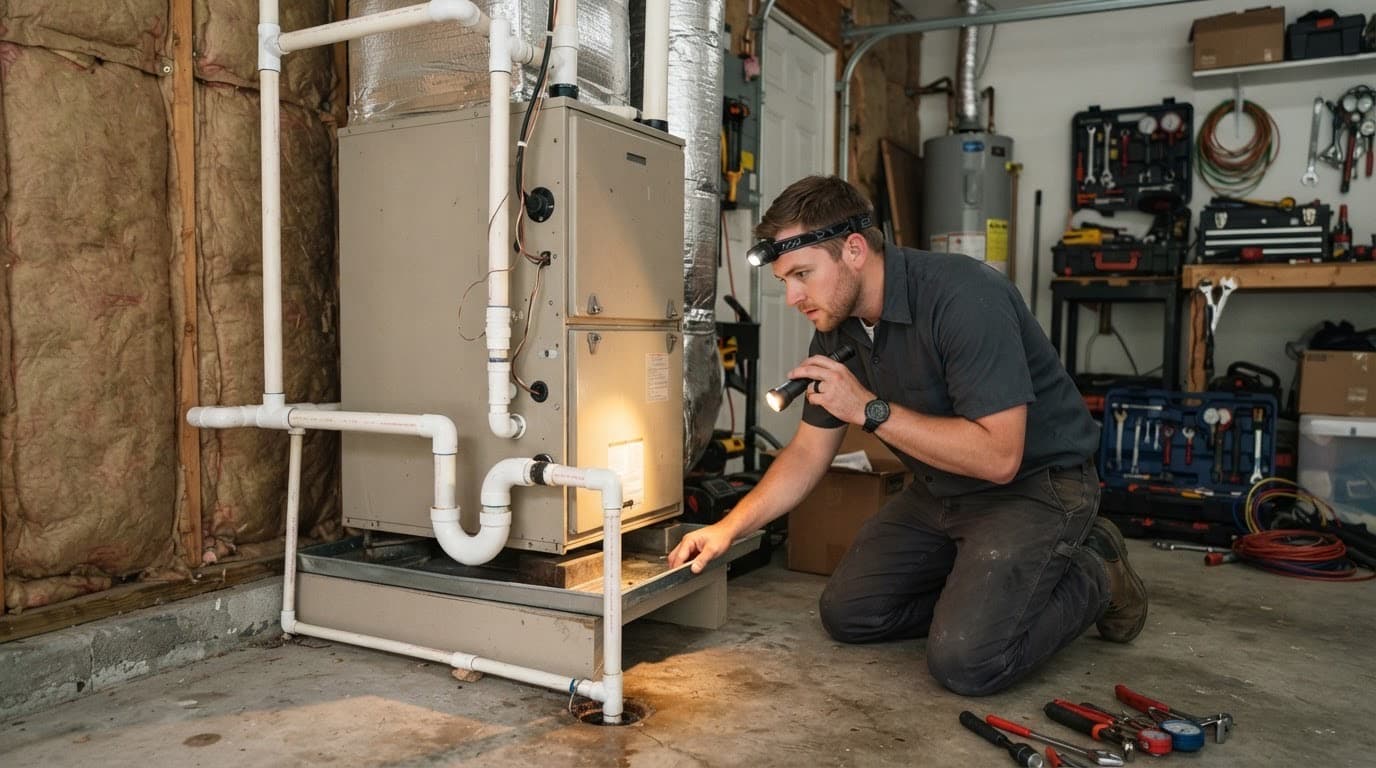
Not every case of winter condensation has the same root cause, and figuring out which one applies usually points straight to the fix. A handful of causes show up again and again across Tampa Bay homes.
Oversized systems and the short-cycling trap
Oversized systems are one of the most frequent culprits, and one of the least understood. A system sized larger than a home actually needs cools the air quickly, satisfies the thermostat, and shuts off before it has run long enough to properly dehumidify the space. The result is a home that reaches its target temperature but stays uncomfortably humid, which sets up exactly the short-cycling pattern that drives sweating.
An oversized system is often installed with good intentions, on the assumption that bigger means better cooling, when in practice it means worse humidity control specifically because it never runs long enough to do that job properly. Older equipment tends to make the problem worse too, since an aging AC unit that has lost some efficiency short cycles more readily than a system running closer to its rated performance, compounding the winter sweating pattern on top of everything else the equipment is already dealing with.
Uneven cooling between rooms can be part of the same picture. Homes where temperature zones never quite settle evenly often have one zone running in short, frequent bursts while another runs normally, and the zone with the choppiest cycling is usually the one where sweating shows up first.
Insulation, thermostat settings, and equipment placement
Beyond sizing, a few other issues show up repeatedly in winter service calls:
- Damaged, missing, or compressed duct insulation, especially in attic runs exposed to temperature swings
- A thermostat with a temperature reading error, which can push the system into runtimes that make short-cycling worse rather than better
- Air handlers or ductwork located in garages, where temperature and humidity swing more widely than in the conditioned living space
- A clogged or partially blocked condensate drain line, which lets moisture back up rather than draining away properly
Any one of these on its own can cause noticeable sweating, and it is common for a Tampa Bay home to be dealing with more than one at the same time, which is part of why the problem can feel confusing to pin down.
The drain line problem that gets mistaken for sweating
That last one deserves particular attention, since a clogged drain line often gets blamed on "the AC sweating" when the real issue is standing water finding its way somewhere it should not be. The two problems can look similar from a homeowner's perspective but need different fixes entirely.
Homes with air handlers in garages see this cluster of issues more than most. Garages swing between hot and cool more dramatically than the rest of the house, and that swing, combined with whatever humidity happens to be sitting in the garage air that day, creates ideal sweating conditions on the coldest parts of the equipment.
When it is a simple fix and when it needs a technician
Some winter condensation is genuinely minor and resolves with a small adjustment. Some of it is an early warning sign of a problem that gets more expensive the longer it sits. Telling the two apart usually comes down to where the moisture is showing up and how much of it there is.
What a minor, self-resolving case looks like
Light condensation on a single metal vent cover, especially one in a humid room, is usually the least concerning version of this problem. It often responds to something as simple as insulating the vent cover itself or programming the thermostat to run more consistently instead of cycling on and off unpredictably.
A homeowner who tries one of these small fixes and sees the sweating stop within a week or two has usually found the actual cause, since minor sweating tends to respond quickly once the underlying mismatch is corrected.
The signs that call for a professional look
A few signs point toward something that needs a professional look rather than a quick fix:
- Water stains spreading on the ceiling or around multiple vents, not just one
- Condensation appearing on ductwork itself rather than just at the register
- A consistently damp spot near the air handler, especially in a garage installation
- Any sign of active dripping rather than light surface moisture
Any of these on their own is worth a call. Two or more happening at once usually means the underlying cause is bigger than a single vent cover or a thermostat setting.
What happens if chronic sweating goes unaddressed
Left alone, chronic condensation does more than create an annoying drip. Water sitting against drywall, insulation, or wood framing over weeks or months can lead to musty odors in the ductwork, the same moisture-driven problem the EPA guidance above is built around avoiding in the first place.
If the sweating is limited, occasional, and tied to one obvious spot, it is reasonable to try a simple fix first. If it is spreading, persistent, or showing up somewhere unusual like the ductwork itself, that is the point where having a technician actually look at duct insulation, system sizing, and the condensate drain line saves far more money than waiting it out.
Catching this early is easier than most homeowners expect. A spring maintenance visit scheduled before peak cooling season is a natural point to have a technician check insulation, drain lines, and system sizing together, whether winter sweating already showed up or not.
Conclusion
Winter AC sweating in Tampa Bay is common enough that it catches most homeowners by surprise the first time they see it, mostly because it runs against the assumption that condensation is a summer problem. It is not. It is a direct result of how mild winter temperatures, persistent Gulf Coast humidity, and short AC cycles interact with the metal and insulation in a home's duct system.
The good news is that almost every cause behind it, from duct insulation to system sizing to a slow drain line, is something a technician can identify and fix without much disruption. The homes that deal with this well are the ones that catch it early, before a damp vent cover turns into a ceiling stain or a mold problem.
If your vents, ducts, or air handler closet have been showing signs of moisture this winter, it is worth having someone take a real look before the damage spreads beyond what a simple adjustment can fix.
Dealing with condensation or unexplained moisture around your AC system this winter? FL HVAC Team can track down exactly what is causing it and fix it before it turns into a bigger problem.